Issue Two
1: Welcome from Michèle Taylor
2: On The Road with Ramps on the Moon… read more
3: Access to Work’ – We’re in trouble… read more
4: Ally or an Accomplice? – which are you? We explore what allyship means with some of our disabled friends, and what it could look like to move from ‘helping people’ to becoming an accomplice… read more
5: Ramps on the Moon Podcast Season Three launches in May 2026 –
but here’s an exclusive for just for you, two great episodes for The Shift subscribers to stream from today – read more
6: The Dilemma Desk – Michèle Taylor live on camera – answers those really difficult questions you have – unseen by her before… read more
7: Change Partner News and feedback from our current cohort of cultural senior leaders… read more
8: Resource Hub… read more
1: Welcome from Michèle Taylor, MBE, Director for Change

Welcome to our second edition of The Shift, your quarterly newsletter that drives meaningful change through anti-ableism in the arts.. In this issue, we have launched our Dilemma Desk response videos. I don’t look at your questions until they are read out to me live on camera – so the answers are unscripted and unfiltered… so keep sending over those ‘difficult to ask questions’ – I love the challenge.
Also, there’s a short piece I’ve written about Access to Work and why it’s important to the whole cultural sector that it’s protected so it can function as it was designed to do. There’s also a great article put together by the Ramps team on whether you’re an Ally or an Accomplice, I highly recommend a good read of that.
Do let us know what you think of The Shift, we want this to be a conversation and thank you so much for joining us.
Michèle
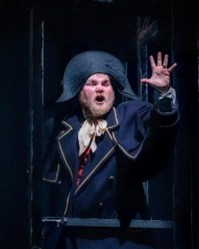
2: On the Road and on Zoom!
We’ve been busy as always at Ramps on the Moon over the past few months since our last edition of The Shift. One of the things I love doing is supporting individuals who are working for change in the sector, and my coaching accreditation is useful in this. I regularly coach and mentor a number of individuals and, clichéd as it sounds, consider it a real privilege to do so.
I’ve been delivering training, facilitating discussions and giving presentations and so I’ve spent a lot of time on the road as well as on the Zoom. It’s been great to work with the National Film and Television School, Disability Arts Online, Queens Theatre Hornchurch and the Science Museum amongst others, and we’ve started two longer pieces of work with the RSC and with Reading Rep to support their anti-ableist practice. We’ve also been plotting and planning around two projects that we can’t say too much about yet…
And of course, there’s our fantastic Cohort, coming to the end of their year with us. The commitment, openness and energy all 12 organisations have shown has been such a joy and many of them have already made meaningful change in their organisations.
We’ll be sending out a call for Expressions of Interest for our next Change Programme, which will bring together a third cohort of arts leaders – so keep an eye out for that.
Season 3 of the Ramps Podcast is taking shape and Marc, our brilliant editor and producer from Podtalk, is finessing episodes as I write this so that we can bring you more of those conversations with fascinating guests.
As if that weren’t enough Shoshana, our Project Manager, and I have been taking part in training to ensure we remain challenged and current in our own thinking and practice.
Coming up, I’ll soon be seeing Theatr Clwyd’s production of Under Milk Wood part of the Craidd initiative that we’ve been supporting in Wales. You can find out more about this HERE
3: We are in Trouble!
The changes to Access to Work in the last few years, plus the inefficiencies and downright failings of the scheme, mean that disabled people can no longer rely on it to ensure that we have what we need to work.
Current waiting times from initial application are up to 37 weeks if you’re employed, and up to 78 weeks if you’re self-employed – just to be assigned a Case Manager. Reconsiderations are taking up to 33 weeks.
If you follow Ramps on the Moon on social media, you’ll have seen that Shosh, our Project Manager, has been talking to disabled people working in the arts about allyship, and as I sat down to write this, that’s where my thoughts initially turned. I was going to urge you, if you’re not disabled, to consider all the ways you can exercise your allyship to support us as we strive to protect Access to Work, because when it works well it can be brilliant.
Then I caught myself: I was forgetting the very heart of Ramps on the Moon’s vision and values. Non-disabled people working to protect Access to Work is about allyship of course, but it is about far more than that. Without disabled people working within it, our cultural sector is impoverished. We are only telling some stories, nurturing some talent, reflecting some experiences, and exploring some truths.
Diminishing Access to Work therefore poses an existential threat to our whole cultural landscape. This is everyone’s concern, as a way of supporting disabled people’s rights certainly, but importantly also to breathe life into our cultural sector so that our stories continue to be exhilarating, affecting and challenging.
Further reading
Read or watch Jenny Sealey’s statement here to get a sense of what the changes to Access to Work mean in practice.
Read Jamie Beddard’s blog here on the Tourettes Hero website for a bit more context.
4: Are you an ally or an accomplice?
In the book, Demystifying Disability, Reyma McCoy McDaid says: “To be an ally is to help people who are marginalised in some capacity, to make the most of their lives in this unchanged system. To be an accomplice, on the other hand, is to work side by side with the people who are marginalised, to confront the system and contribute to shifting it accordingly.”
We’re exploring what allyship means with some of our disabled friends, and what it could look like to move from ‘helping people’ to becoming an accomplice.
That difference, between helping and changing, is what Ramps on the Moon has been exploring with some of the disabled artists, advocates and leaders within our network. We asked them what allyship means to them. Their answers don’t converge on a single definition, which is why these conversations matter so much.

Ben Wilson, actor, director, theatre maker and audio describer, and one of our Agents for Change at Sheffield Theatres for over five years – is clear that allyship is not unconditional deference.
“Allyship is acting when it’s easy and acting when it’s hard. Not just acting when it benefits yourself. Allyship is not just bowing down and doing whatever someone else says. Yes, it’s about listening and learning, but it’s also about challenging, pushing and encouraging.”
He adds something that often gets left out of these conversations:“Allyship is also fun. It can be a joyous collaboration that deepens your understanding of the world.”
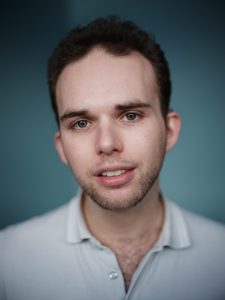
Maximilian Fairley, nominated for Best Newcomer at the 2024 Offies for his performance in Unforgotten (ITV), offers another definition.
“Allyship to me is for an ally to view me through the same lens as someone who is able-bodied. To not be treated differently or as if I’m fragile, but accept certain adjustments as part of my own complex patchwork, just like anyone else might have.”
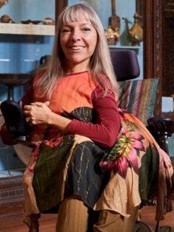
Esther Fox, Head of the Accentuate Programme at Screen South and a Ramps on the Moon board member, has spent over fifteen years leading change for deaf, disabled and neurodivergent people across the cultural sector.
“Genuine allyship needs to be proactive and courageous; it is not about maintaining the status quo.” She goes further. “Perhaps one subtlety is non-disabled allies need to recognise the knowledge and experience of disabled people to lead the change.”
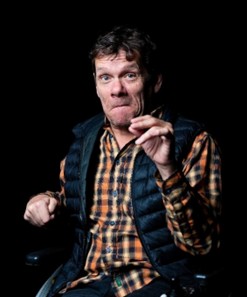
Jamie Beddard, Co-Director of Diverse City and a long-standing figure in disability arts, takes a wide view.
“Allyship is about inhabiting the bigger picture, understanding synergies we share, whilst recognising specific barriers faced by some.”
His call is to broaden out, to resist insularity: “Unlikely alliances are the key to making systemic and sustained change. Our own choirs can become tired and overly-familiar, so better to broaden, collectivise and multiply; making far more noise.”
.
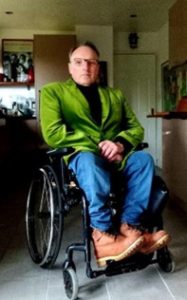
Andrew Miller MBE, UK Arts Access Champion, co-founder of the UK Disability Arts Alliance, and a leading advocate for inclusion across British cultural institutions, puts it with urgency:
“Throughout our lives, we all need allies, champions and advocates. If you happen to be disabled, that additional amplification really counts. Especially now, as our society and politics splinter, the principles of inclusion are daily under attack, and disabled people often face disrespect and deeper marginalisation. We’ve never needed our allies more.”
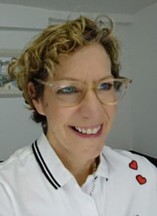
Laura Guthrie, Artist Development Manager for Graeae and Co-Director of Meander Theatre Co, closes with a reminder about who is included in this.
“We should all see ourselves as allies; our community is gloriously intersectional. So every aspect of allyship needs to be about standing next to and in solidarity with our fellow disabled human beings, objecting loudly to injustice and ableism in all its forms.” She adds a note that organisations often forget in their pursuit of access metrics: “Allies can raise the bar by also celebrating passionately the talented creatives whose work should never be undersold or overlooked.”
Six people, six definitions and yet something powerful holds them together. Allyship, in every account here, is active. It shows up when it’s inconvenient. It listens without being passive. It follows without disappearing. It celebrates without condescending.
The thought isn’t really about whether someone considers themselves an ally. It’s about what that looks like in practice – in the decisions made, the artists platformed, the systems challenged or left in place.
Perhaps the shift from ally to accomplice is less about declaring it and more about practising it, again and again, in the small decisions as much as the large ones.
The Ramps on the Moon Change Programme continues to transform anti-ableist practice across the performing arts sector. If you’re a leader who might be interested in joining our cohort of cultural leaders – we’re currently welcoming expressions of interest. We’d love to hear from you.
https://rampsonthemoon.co.uk/organisational-change/
The quotes and feedback in this article were sourced by Shoshana Jones, Project Manager, Ramps on the Moon.
5: Exclusive podcast episodes for SHIFT subscribers!
We’re thrilled to announce that Season Three of our Ramps on the Moon podcast is about to land in May 2026. Packed with challenging discussions and brutally honest opinion, this season reaches further than ever before into frank discussions on ableism, equity and representation.
If you haven’t already listened to our first two seasons – then we’d love you to immerse yourself into 14 episodes with Michèle and her guests as they uncover the joys, the tensions, the breakthroughs and the lessons in placing disabled people at the centre of cultural organisations.
And here are two of our latest episodes, yet to be released to the public, and available only for Shift subscribers
Your space for the bumps, scrapes, difficult conversations and barriers that come with embedding anti-ableism. Michèle Taylor answers those really difficult questions you have - live, unscripted and not seen by her before

Conversations are happening across the sector that never quite make it into the room – this is your space to ask.
You are invited to send in your real dilemmas about embedding anti-ableism in your organisation – whether it’s leadership buy-in, internal resistance, or where things feel stuck.
You can be honest. You can be direct. You can stay completely anonymous, and your question will be put to Michèle with no prep, no script, and no prior warning – live on camera. Her response will be shared right here, at the Shift’s Dilemma Desk
Submit your question below and be part of the conversation:
7: Latest news from our cohort of cultural leaders on the Change Programme
The Ramps on the Moon vision is crystal clear. We see a cultural mainstream that stops treating disability as an afterthought and starts recognising it as a source of ambition, imagination and leadership. Because when disabled people tell their own stories, the sector becomes braver. Stereotypes fall apart. Lives improve. And audiences encounter work that is richer, sharper and unmistakably reflective of the world we all live in.
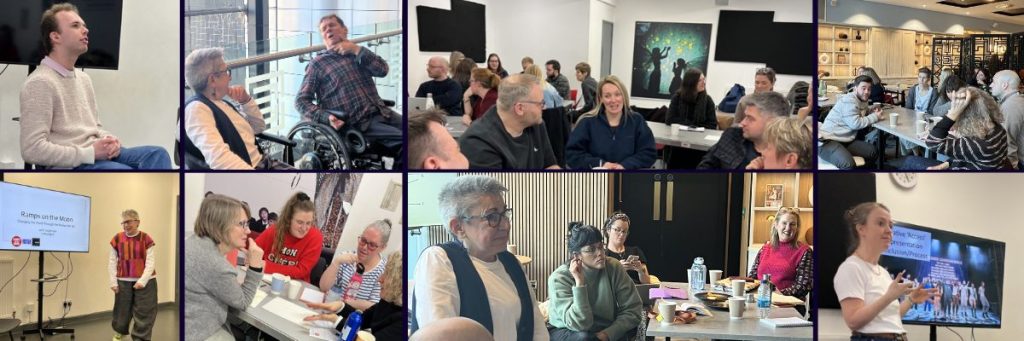
Over the past three months our current cohort of arts leaders have been brilliantly driving their anti-ableist strategies into the framework of their organisations. Sharing their work with one another has created an exciting movement, where alliances have been formed creating a strong unified driving-force. Our 7th session, which was held on site at the RSC, resonated with so many of our cohort members, where they heard from our board trustee and Artistic Director Amy Leach and Maximilian Fairley, stage and television actor. Most recently in our 8th session, we looked at Irresistible Momentum – and compared personal values with organisation values – the result was quite a surprise to some of us! Here’s some feedback from those sessions:
We’ll be sending out a call for Expressions of Interest for our next Change Programme, which will bring together a third cohort of arts leaders – so keep an eye out for that.
Participation in the Change Programme includes a programme of monthly workshops, discussions and training for senior leaders in your organisation, mentoring and advice from Ramps on the Moon and our partners People Make It Work, and access to a network of individuals and organisations who are at different stages along the same journey of embedding anti-ableist practice.
8: Resource Hub

Check out our Resource Hub, packed with useful advice, tools, videos and stories from our founders on the legacy of Ramps on the Moon.
Take me to the Ramps Resource Hub

Thank you for taking the time to read The Shift – we’d love your feedback and look forward to bringing you another edition soon.
Contact us HERE for general enquiries and feedback.
Find out more about our Change Programme, Consultancy and Training
If you missed The Shift Issue 1 – you can find it right here
Email: info@rampsonthemoon.co.uk for more information
DISCLAIMER: The information in this newsletter is provided for general guidance only and may be subject to change. No responsibility is accepted for any actions taken based on its content.